0:00
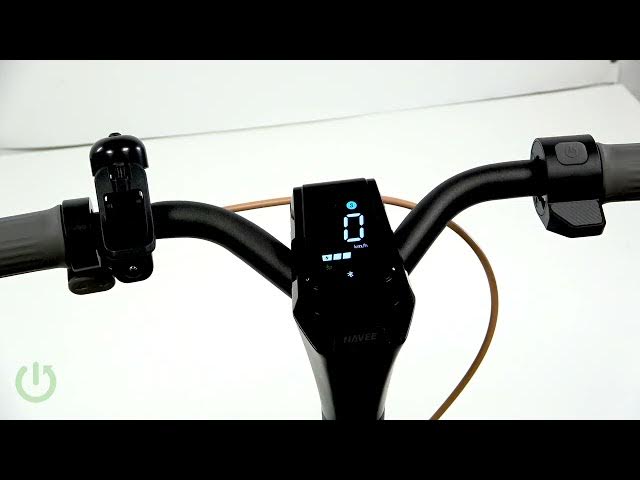
Hello guys. Today I've got the Navy GT3
0:02
Max and we're going to talk about the
0:05
fix when you have your max range lower
0:14
Remember this advertised 64 miles uh
0:18
about 75 km of course on the Navy GT3
0:21
Max is measured under ideal laboratory
0:25
conditions. light rider, flat road, low
0:28
speed, warm water, no wind, and minimal
0:32
braking or acceleration.
0:34
[clears throat] In real world riding,
0:36
most duty-free Max uh owners report more
0:39
like 45 or maybe 45 35 between 45 km
0:45
aggressive riding and 45 to 60 km
0:49
moderate riding. Occasionally higher in
0:51
the ideal conditions. So if you're
0:54
getting far below the adversized range,
0:56
this is often normal. But some things
0:58
can reduce range much more than expected
1:02
such as for example the tire pressure.
1:05
And the tire pressure, low tire pressure
1:07
actually is a top one real world range
1:09
killer. Multiple JTU owner specifically
1:12
discovered low tire pressure cause major
1:15
range loss. Check tires when cold. It
1:18
should be typically around 45 or 50 PSI
1:21
for road use. Heavier riders may need
1:24
slightly more low pressure causes uh
1:29
some something like battery drain, slug
1:32
acceleration, uh higher rolling
1:35
resistance and many more.
1:37
Riding mode actually sport mode which is
1:40
this S mode dramatically reduces the
1:42
range. The GT3 Max uh uses much more
1:46
power and acceleration, high hill
1:49
climbing and high speed riding. Many
1:52
owners report that D mode gives much
1:54
better range but S mode can cut uh range
2:01
choose mode D. The rider weight is
2:05
actually uh the important factor too
2:09
because manufacturer tests actually
2:11
assume 70 kg around rider smooth flat
2:17
road and constant low speed. Heavier
2:20
riders can easily lose uh 20 to 55%
2:25
range. I for example weigh 100 kilos. So
2:30
it's um very difficult for me to get
2:33
this 75 kilograms uh 75 kilometers not
2:37
kilograms you know what I mean. Uh apart
2:41
from that speed affects range massively.
2:43
You need to remember about that because
2:45
electric scooters become much less
2:47
efficient uh efficient at higher speeds.
2:50
For example, 18 kilometers per hour may
2:53
give near maximum range where 25 to uh
2:58
42 km/h can reduce range dramatically.
3:02
Wind resistance rise exponentially.
3:05
When it comes to the cold weather, uh
3:08
it's a important factor too because uh
3:11
lithium batteries lose sufficiency in
3:12
cold in cold temperatures. So below
3:15
about 10 10 Celsius, you may notice
3:18
reduced range when your temperature is
3:21
near freezing losses can become
3:25
Hills and stop start traffic may be the
3:28
factor too. frequent braking, frequent
3:33
uh frequent inclines and something like
3:36
that consume far more energy than steady
3:40
cruising. Orban riding really matches
3:45
Generative braking settings can be a
3:49
problem too. I know that it shouldn't
3:51
actually be like this, but uh it has
3:54
very strong region braking. Proper
3:56
region can slightly improve efficiency
3:58
but a aggressive acceleration still
4:00
dominates consumption. So you need to
4:03
select this option either to low or set
4:08
battery balancing near 100. If the
4:11
scooter is new, the battery may need
4:13
several full charge cycles to calibrate.
4:16
Try charge to 100%. Then leave on leave
4:20
plugged in under 30 or 60 minutes
4:22
occasionally and avoid constant partial
4:27
And uh that should be it for this video.
4:30
If you found it helpful, please consider
4:32
subscribing to the channel and leave a
4:34
like under our video. Goodbye.